Generative Engine Optimization (GEO) vs. SEO: Is It Just a Rebrand?
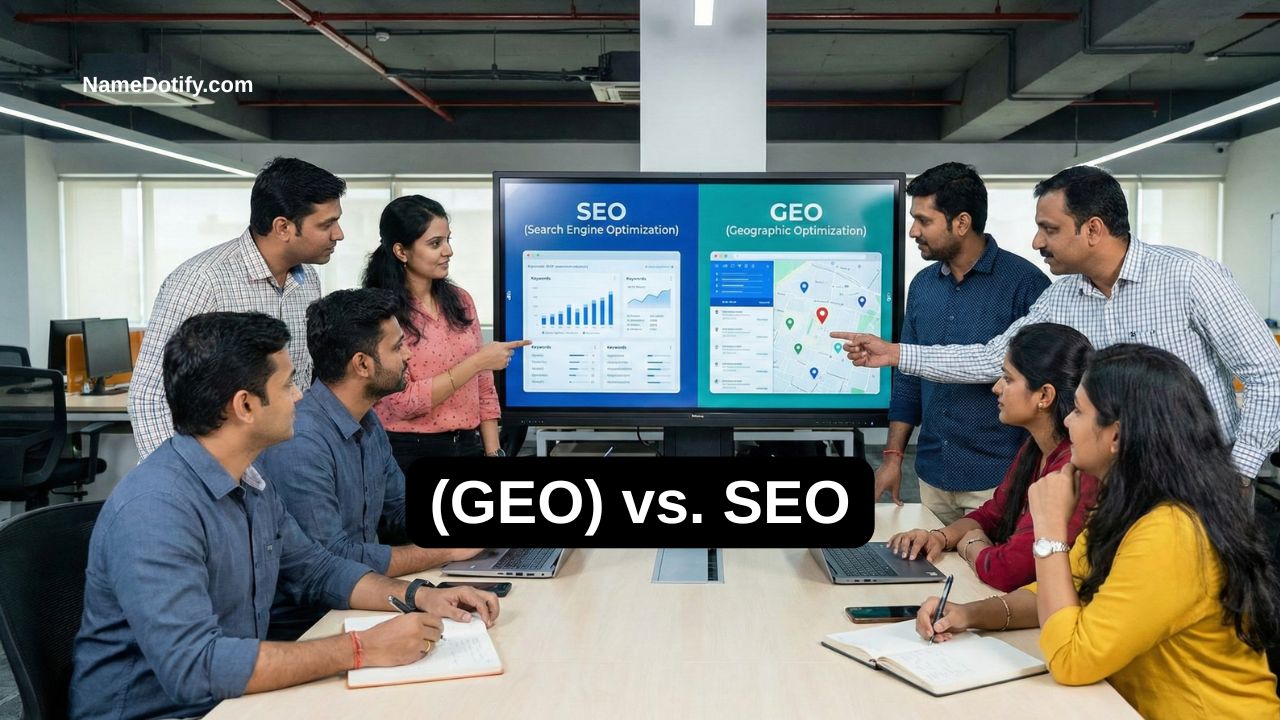
The SEO industry loves a good buzzword. Lately, everyone seems to be talking about GEO (Generative Engine Optimization).
You’ve probably seen the long guides from big publications claiming that GEO is the "future of search" and that regular SEO is dead. It sounds scary if you run a website.
But is it actually anything new?
We spent some time at NameDotify looking closely at these popular GEO playbooks. When we broke down the actual advice, the results were pretty funny: out of the 20 "new" strategies they recommend for GEO, 18 of them are just basic SEO practices we’ve all been doing for years.
Let’s look at what GEO actually is, and what you really need to do to rank on AI search engines.
The 'New' GEO Tactics Are Mostly Just Old SEO
If you read these guides, the advice sounds exactly like what SEOs have been doing since 2010. Here are the biggest rebrands we found:
1. Conversational and Long-Tail Keywords
GEO guides tell you to focus on conversational queries for AI bots. But honestly, SEOs have been targeting long-tail keywords since 2009. We do it because they convert better and have lower competition, not because an AI told us to.
2. Semantic SEO and Entity Optimization
People say AI engines need "entities" and "semantic relevance" to understand your content. The reality? Google moved to semantic search back in 2012 with the Knowledge Graph. Optimizing for entities isn't a new AI trick; it's just standard semantic SEO.
3. Brand Perception Intelligence (A.K.A. E-E-A-T)
GEO experts love talking about "Brand Perception Intelligence." This is just a fancy name for Google's E-E-A-T (Experience, Expertise, Authoritativeness, and Trustworthiness). Google put these exact rules in their Quality Rater Guidelines years ago.
4. Technical SEO: Speed, Mobile, and HTTPS
A lot of GEO guides mention website speed, mobile-friendliness, and HTTPS as ranking factors for generative engines. Google has openly used speed and mobile performance as ranking signals since 2015.
Pro Tip: You can check if your site passes these basic requirements right now using an Advanced Website Speed Checker Test.
5. Structured Data Schema
They also claim you need structured data schema specifically for AI bots. But Schema.org was built by Google and Microsoft back in 2011. Plus, language models usually just read text as data streams anyway, so schema still mostly helps classic search engines figure out your pages.
If you hate writing code manually, you can use our Professional Schema Generator Tool to create error-free JSON-LD in seconds.
Is Anything Actually New in GEO?
If almost everything in GEO is just repackaged SEO, is there anything actually new to learn?
After going through everything, we found exactly one thing that is genuinely new: Tracking Chatbot Responses.
Looking at how your brand is mentioned inside ChatGPT, Claude, or Google’s AI Overviews is new simply because these platforms didn't exist a few years ago. But since AI Overviews show up directly on the normal Google search page, optimizing for them is still mostly just regular SEO work.
What You Should Actually Do for AI Search
Don't throw away your current SEO strategy just to chase a new acronym. Stick to the basics that actually work:
- Write for humans: Stop trying to write for bots. Answer questions clearly and get straight to the point.
- Fix your tech issues: A broken site won't be indexed by normal crawlers or AI bots. Run a quick scan through an Advanced SEO Auditor Tool to fix broken links and slow pages.
- Build real authority: Do real PR, get mentioned on good websites, and encourage real user reviews.
- Optimize your media: AI engines pull a lot of videos and images. If you use video, make sure you optimize it using a YouTube SEO Analyzer to find the best tags.
Conclusion
Don't let the fear of missing out on "GEO" distract you. It’s mostly just a repackaging of the same old SEO practices. If you are doing good, clean SEO—making your site fast, structuring your data, and writing content people actually want to read—you are already doing GEO.
Keep your technical foundation strong, and your website will be just fine.